


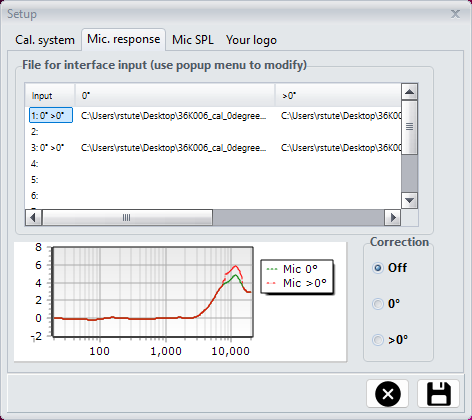
Messmikrofone werden entweder für Freifeldmessungen (0°-Ausrichtung) oder für Diffusschallmessungen (90°-Ausrichtung) ausgelegt. Idealerweise weisen sie in der vorgesehenen Ausrichtung einen möglichst linearen Frequenzgang auf – was in der Praxis jedoch meist nur hochwertige und entsprechend teure Mikrofone erreichen.
Erfolgt die Messung in einer anderen Ausrichtung als vorgesehen, können frequenzabhängige Abweichungen von mehreren dB entstehen. Ein Beispiel für ein Messmikrofon für Diffusschall ist das Beyerdynamik MM1 - linear bei 90°.
x1RTA ermöglicht daher, für alle 10 Eingänge separate Korrekturdateien für 0° und 90° zu hinterlegen, sodass Messungen unabhängig von der Mikrofon-Ausrichtung korrekt kompensiert werden können.
Measurement microphones are designed either for free-field measurements (0° orientation) or for diffuse sound measurements (90° orientation). Ideally, they should have a frequency response that is as linear as possible in the intended orientation – though in practice, this is usually only achieved by high-quality and correspondingly expensive microphones.
If the measurement is taken in an orientation other than that intended, frequency-dependent deviations of several dB may occur. An example of a measurement microphone for diffuse sound is the Beyerdynamic MM1 – linear at 90°.
x1RTA therefore allows separate correction files for 0° and 90° to be stored for all 10 inputs, so that measurements can be correctly compensated for regardless of the microphone orientation.
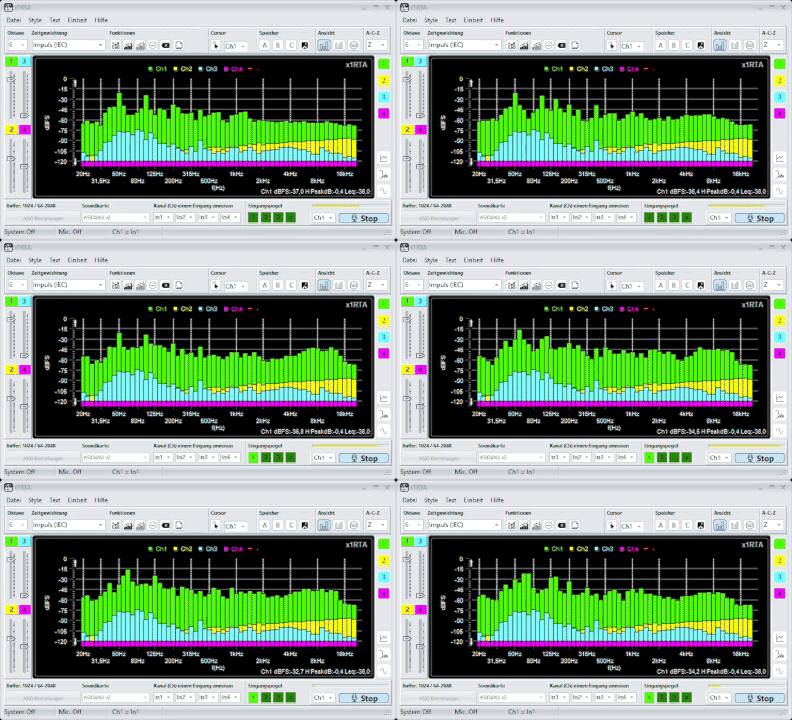
FFT oder RTA?
RTA Oktavband-Messungen wirken im Vergleich zu einer FFT zunächst grob. Aber genau diese reduzierte Auflösung ist jedoch in vielen praktischen Anwendungen ein Vorteil.
Der entscheidende Punkt: Oktavbänder orientieren sich an der frequenzabhängigen Auflösung des menschlichen Gehörs und entsprechen zudem gängigen technischen Normen. Dadurch liefern sie eine besser interpretierbare und praxisnähere Darstellung als eine hochauflösende FFT.
At first glance, RTA octave band measurements appear rather coarse compared to an FFT. However, it is precisely this reduced resolution that proves advantageous in many practical applications.
The key point is that octave bands are based on the frequency-dependent resolution of human hearing and also comply with standard technical specifications. As a result, they provide a more interpretable and practical representation than a high-resolution FFT.
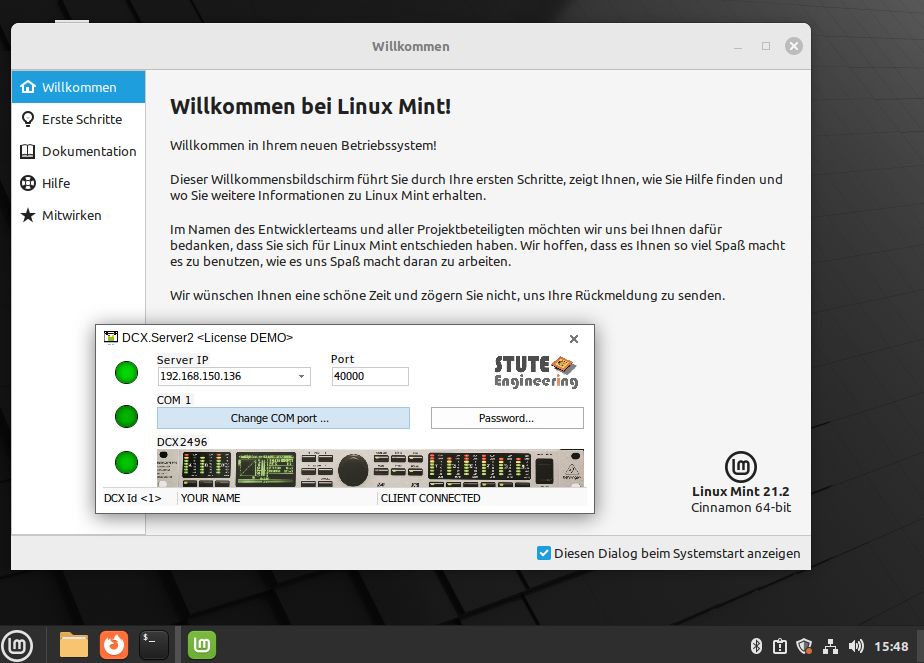
Haben Sie es gewusst? Sie können DCX.Server für MS-Windows mit einem Linux-PC in Kombination mit der kostenlosen WineHQ-Erweiterung verwenden, wie z.B. Linux Mint 21 mit WineHQ 8. So können Sie Ihre DCX2496 bequem von Ihrem Tablet-PC oder Handy aus per WLAN steuern.
Good to know: You can use DCX.Server for MS-Windows with a Linux PC in combination with free WineHQ extension, like Linux Mint 21 with WineHQ 8. So you can control comfortable your DCX2496 from your tablet PC or cell phone via WiFi.


Genial einfach: Bluetooth Audio Interfaces überprüfen mit dem Audio Messsystem x1Analyzer . Funktioniert auch bei HiFi Audio Netzwerk oder MP3 Player.
- 1. Bluetooth Interface Signalausgang mit dem Eingang der Deiner Soundkarte verbinden
- 2. Unsere MP3 / WAV Testsignale vom Handy, USB Stick oder NAS Server abspielen
- 3. x1Analyzer: Messen „Frequenzgang“ oder „Verzerrungen“ oder Check „Klangregler /EQ" Funktion
Ingeniously simple: Check Bluetooth audio interfaces with the x1Analyzer audio measurement system. Also works with hi-fi audio networks or MP3 players.
- 1. Connect the Bluetooth interface signal output to the input of your sound card.
- 2. Play our MP3/WAV test signals from your cell phone, USB stick, or NAS server.
- 3. x1Analyzer: Measure “frequency response” or ‘distortion’ or check the “tone control/EQ” function.